Family Studies

A Practical Guide to Family Studies with Lifetime Data

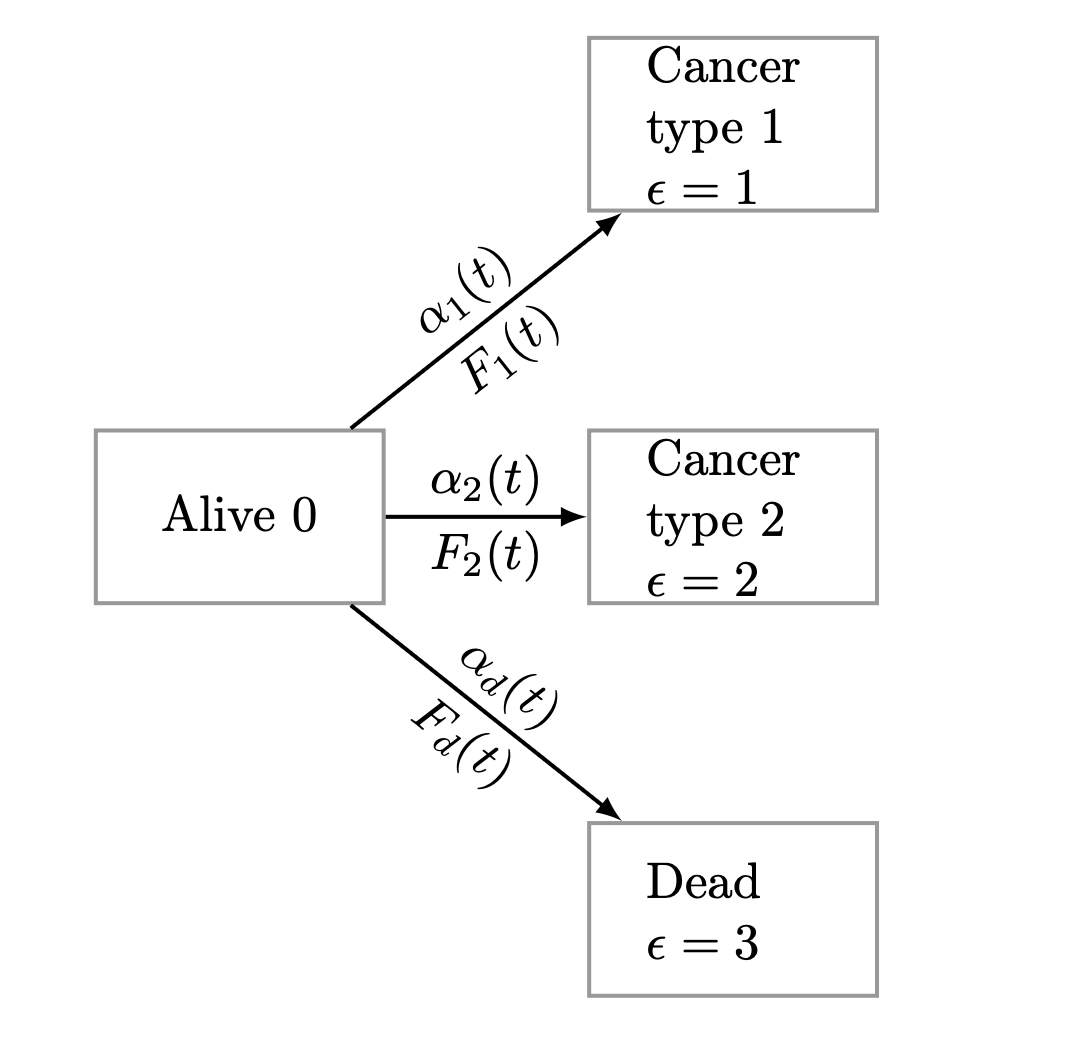
Familial aggregation refers to the fact that a particular disease may be overrepresented in some families due to genetic or environmental factors. When studying such phenomena, it is clear that one important aspect is the age of onset of the disease in question, and in addition, the data will typically be right-censored. Therefore, one must apply lifetime data methods to quantify such dependence and to separate it into different sources using polygenic modeling. Another important point is that the occurrence of a particular disease can be prevented by death mdash that is, competing risks mdash and therefore, the familial aggregation should be studied in a model that allows for both death and the occurrence of the disease. We here demonstrate how polygenic modeling can be done for both survival data and competing risks data dealing with right-censoring. The competing risks modeling that we focus on is closely related to the liability threshold model. doi: “10.48550/arXiv.2502.03942”
April 2022 · Thomas H. Scheike, Klaus Kähler Holst
The extended liabilitiy model

The liability threshold model for censored twin data

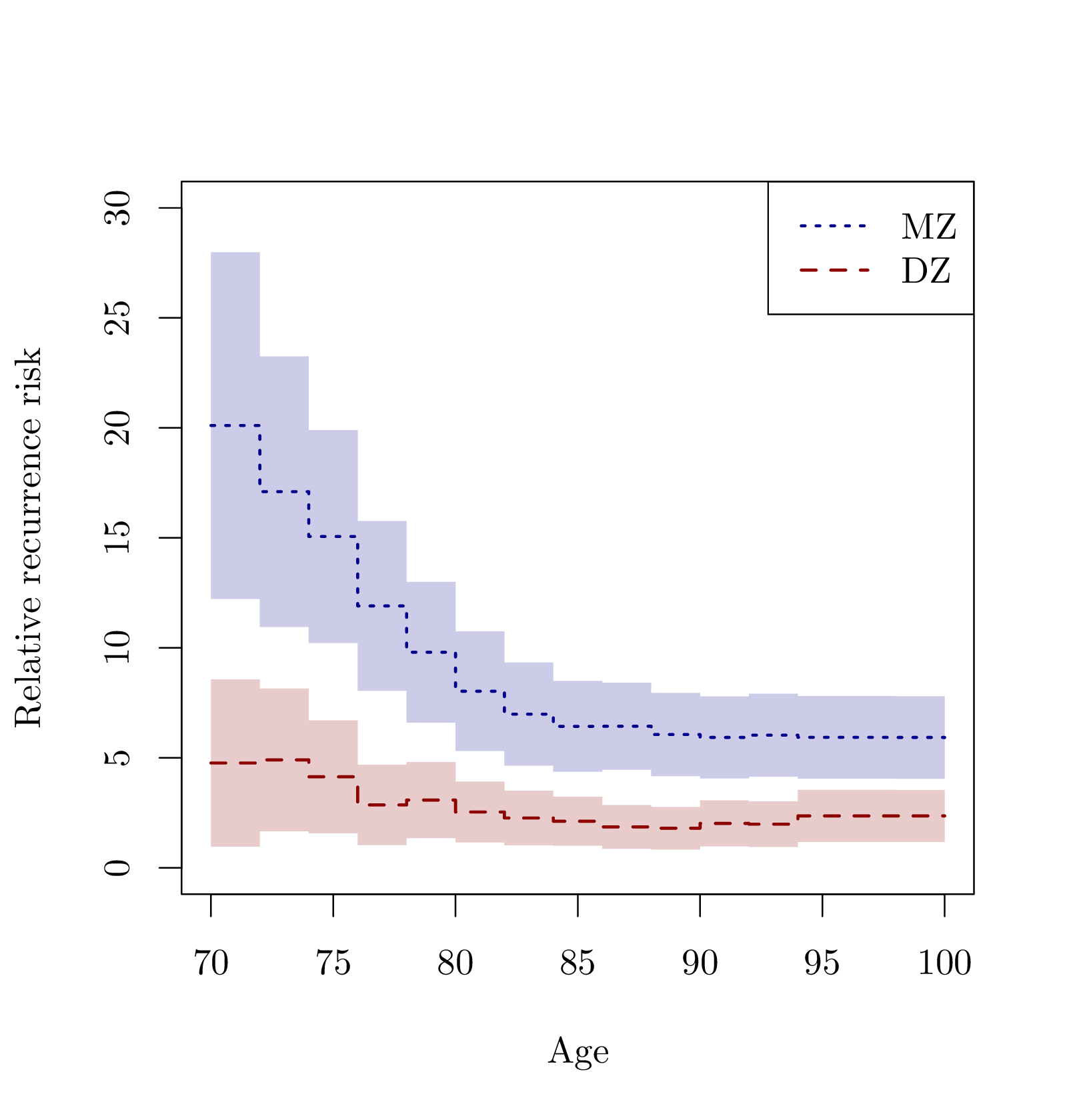
Family studies provide an important tool for understanding etiology of diseases, with the key aim of discovering evidence of family aggregation and to determine if such aggregation can be attributed to genetic components. Heritability and concordance estimates are routinely calculated in twin studies of diseases, as a way of quantifying such genetic contribution. The endpoint in these studies are typically defined as occurrence of a disease versus death without the disease. However, a large fraction of the subjects may still be alive at the time of follow-up without having experienced the disease thus still being at risk. Ignoring this right-censoring can lead to severely biased estimates. The classical liability threshold model can be extended with inverse probability of censoring weighting of complete observations. This leads to a flexible way of modelling twin concordance and obtaining consistent estimates of heritability. The method is demonstrated in simulations and applied to data from the population based Danish twin cohort to describe the dependence in prostate cancer occurrence in twins.

January 2016 · Klaus Kähler Holst, Thomas H. Scheike, Jacob Hjelmborg